
Czechia has joined LOFAR ERIC
Czechia has joined the largest European infrastructure in the field of radio interferometry, the international LOFAR telescope (short for LOw Frequency ARray). LOFAR is a network of nearly fifty receiving stations operating or under construction in a total of eleven European countries. One of them should be built in Czechia within three years. The system works as one giant antenna, a so-called interferometer, which allows detailed imaging of objects in the near and distant universe on radio waves. However, the scientific use of the device is much broader and, in addition to research in many areas of astrophysics, it is also used in fields such as monitoring and forecasting space weather, studying the ionosphere, lightning physics, and the interaction of cosmic ray showers with the Earth’s atmosphere. This is reflected in the high demand from the Czech research community, with several institutes of the Academy of Sciences and university departments expressing long-term interest in participating in the project.
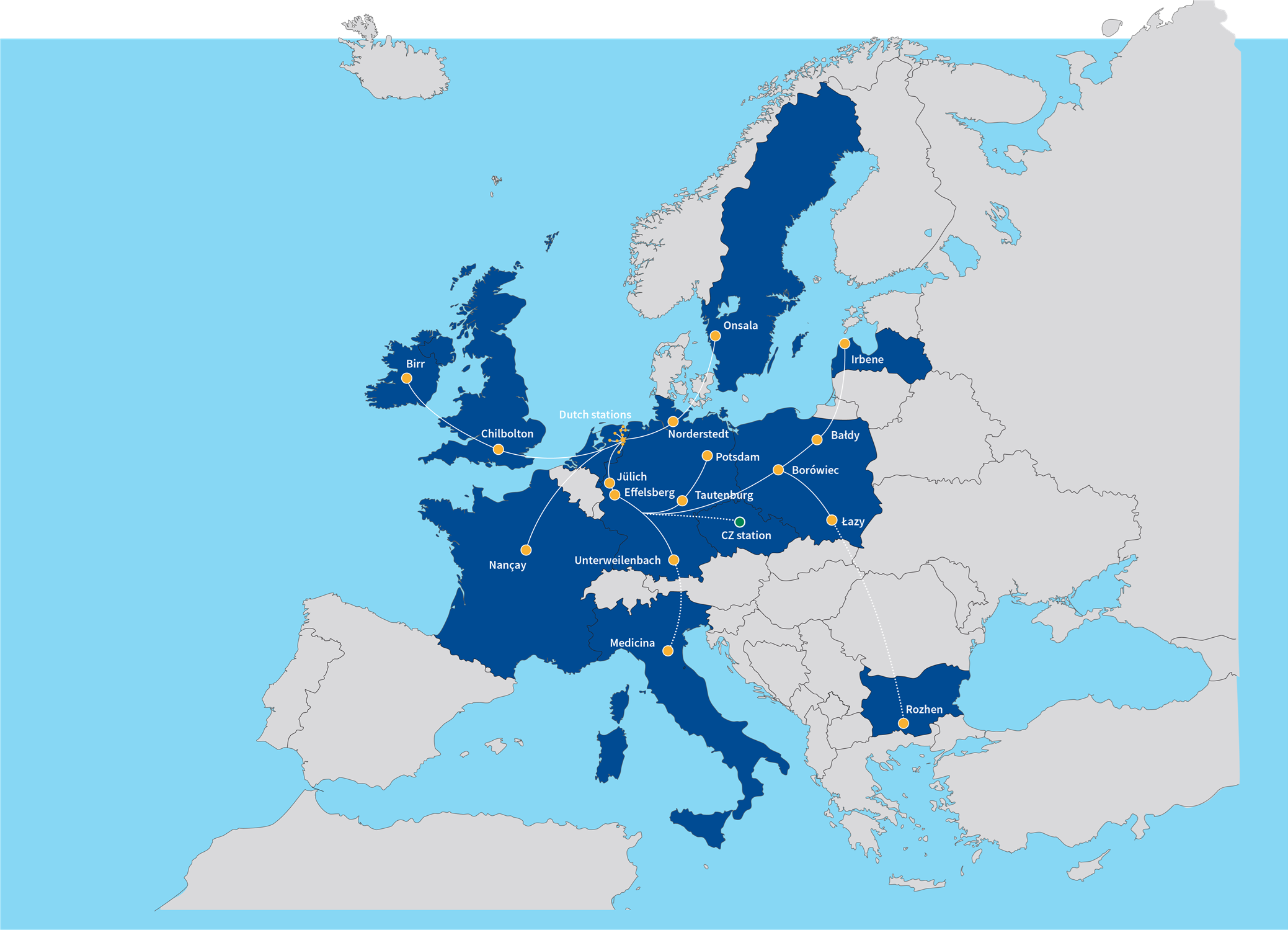
Source LOFAR /ASTRON
The LOFAR radio interferometer is one of the key projects mentioned in the ESFRI Roadmap for European research infrastructures and is organized under European law as an ERIC (the European Research Infrastructure Consortium). The Czech Republic is a member, represented on the LOFAR ERIC Governing Board by Dr. Jan Buriánek, representative of the Ministry of Education, Youth and Sports (MEYS), while the Czech scientific community is currently represented on the Board by Dr. Miroslav Bárta from the Astronomical Institute of the Czech Academy of Sciences (AsI CAS).
The Czech Republic became a member of ERIC LOFAR at a Council meeting held on September 24, 2025, in Paris. At this meeting, which was important for both the Czech Republic and LOFAR, the Czech participation was represented by Dr. Bárta, Dr. Marek Vyšinka, Head of the Research Infrastructure Department at the MEYS, and Dr. Pavel Jáchym, Head of the research infrastructure EU-ARC.CZ (Czech participation in the ALMA project). EU-ARC after its planned expansion will cover the operation of the Czech LOFAR station and the servicing of the Czech scientific community. The admission itself was preceded by long and demanding negotiations between the MEYS, LOFAR ERIC, and the AsI CAS, as the leading representative of the Czech telescope user community. The effort was successfully completed with the submission of the Czech application by the MEYS and its subsequent acceptance at the LOFAR ERIC Council meeting in Paris.
Czechia was welcomed among the consortium members by Dr. Jacqueline Mout, Chair of the LOFAR ERIC Council. She appreciated that “the Czech Republic’s entry into the LOFAR project reflects the growing interest and activity of the community behind LOFAR’s scientific mission.” She went on to say that “Czechia brings additional energy and valuable expertise to this international collaboration and will certainly play an important role in shaping the next phase of LOFAR’s development.” She also praised the rich experience in the field of systematic support for the user community that Czech science has within the service infrastructure for the ALMA observatory, which will also be innovatively applied to scientific users of the international LOFAR telescope. LOFAR ERIC Director General Prof. Michiel van Haarlem “welcomed the Czech Republic to the thriving community centred around the LOFAR project, its scientific use, and further development. The installation of the LOFAR station in Czechia will also contribute to the broader scientific reach of this international network and to deeper cooperation within the consortium. This is an exciting step forward for LOFAR and for European radio astronomy as a whole.”
For Miroslav Bárta and Pavel Jáchym, representatives of the Czech scientific community, the Czech entry into LOFAR means “a huge leap forward for development of Czech research in astrophysics and other fields and is a unique opportunity for the wider Czech user community.” As Dr. Bárta said, “it is a dream come true for an entire generation of Czech astronomers.” Radio observations, and in particular interferometry and aperture synthesis, are a modern and promising field that is experiencing a worldwide boom and has applications in many areas of research. By joining ERIC LOFAR, Czechia has confirmed its position as a rising star in the European radio astronomy sky. After more than a decade of successful work within the international ALMA observatory, operating as a millimetre wave interferometer, it has now joined a second major project with a global impact in this field. Participation in LOFAR ERIC stems from a rich tradition of radio spectroscopy operated at the AsI CAS since 1966.
As in the case of Czech participation in the ALMA project, engagement in LOFAR ERIC is from a technical perspective secured by the AsI CAS in the framework of the EU-ARC CZ large research infrastructure funded by the MEYS. As stated by representatives of the MEYS, that is responsible the Czech involvement in all ERICs, Dr. Vyšinka and Dr. Buriánek “Czechia joining LOFAR ERIC means a significant contribution to the development of Czech astronomy and its integration into international research environment.”
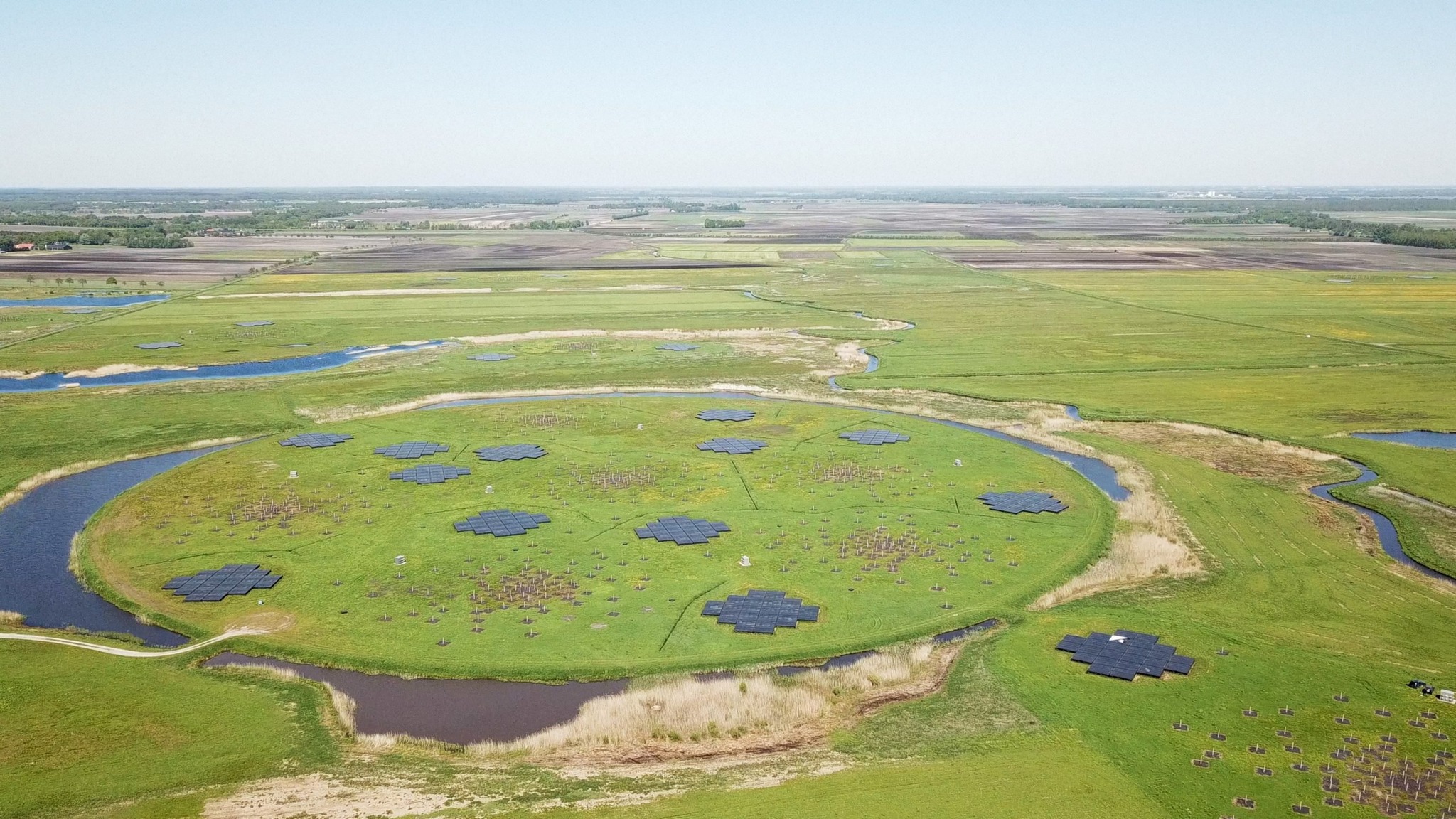
Source LOFAR /ASTRON